Sunday, 16 March 2014

Oxford Bags - Room to Gigolo Your Legs!

As fashion was getting more casual, especially with menswear, fitted garments were on the decline - whilst everything was nipped in before, now it was flaring out and softer shapes were used.
(Source: fashion beans.com) Advertisement for a pattern for Oxford Bags, and Oxford graduates wearing them. I think it works really well with the pinstriped suit as it adds a point of interest.

Oxford undergraduates had started wearing grey flannel trousers which were loose fitting and baggy - to the very extreme it could be taken to; these huge billowing layers of fabric flowing around men's legs as they walked. I think these are brilliant and so different compared to the skinny trends we have now - it looks so casual and paired with a suit jacket creates a really smart-casual balanced look.

(Source: putthison.com) 

In contrast to the relaxed garments, Men nicknamed 'Gigolos' (dark skinned South American men) who wore razor-sharp tailoring and perfectly pressed garments were appearing in clubs. They rivaled the classic gentleman's look, and many women were drawn to them, so they became sorts of male escorts. I think their look is classic and despite the undertones of loose morals and high sexualisation, they seemed like smooth, neat men. 

(Source: dailymail) Modern day portrayal of a Gigolo
(Source: wanderlustnpixiedust.com) Illustration of a Gigolo

Saturday, 15 March 2014

The Cotton Club


The Cotton Club was a New York nightclub which was open from 1923 to the 1940's. It first opened in Harlem, being a 'whites only' club despite famous black musicians such as Nat King Cole and Louis Armstrong. It continued to sell beer even during prohibition (a national ban on the sale, importation, production and transportation of alcohol in America in the 20's and early 30's). Since The Cotton Club was run (behind the scenes) by gangsters, they got away with it many times and continued to do so.

(Source: longwharf.com) The Cotton Club exterior 


(Source: wikimedia) Gangster Owney Madden, who ran the famous club and famed for his organized crime, especially during Prohibition.

https://www.youtube.com/watch?v=Fy_JRGjc1To Nat King Cole performing 'Unforgettable'

(Source: wikimedia) Louis Armstrong - you can tell just by one picture that his music was upbeat and fun

Clubs were huge in the 20's - a craze for dancing had erupted, and it spread like wildfire - Ragtime was reaching the height of popularity, as was the Tango (due to its starring role in many Hollywood movies) and new styles of dance, such as Lindy Hop and Jazz were evolving due to the popularity of jazz and blues music, and the amount of Gatsby-esque parties they were danced at.
(Source: allpurposeguru.com) A still from the outrageous Ragtime dance.

However one dance in particular epitomised the 20's - The Charleston. It involves much bobbing to the music, with outward kicks and arm movements. It was performed in many clubs including speakeasies - flapper girls were seen dancing to this the most, but its popularity was so strong it became a full blown fad! I myself used to dance The Charleston and it was such a fun dance to do - tiring, but really social and carefree; much like the 20's themselves.

https://www.youtube.com/watch?v=ZJC21zzkwoE The Charleston

Walk The Line

In contrast to the previous eras with trends of Art Nouveau and curved silhouetted, with its arcs and flicks, the 20's was very much about banishing curves and replacing them with strong, clean lines. The focus on detailing had almost entirely disappeared and now art and architecture was filled with lines and minimal detailing. Many buildings were rectangular with simple triangular details. Everything was becoming abstract and almost futuristic, given the high spirits and forward movements of almost everything.


(Source: deco-shades.com) The Rockefeller Centre, The Chrysler Building and the Empire State building. All are based on a stacked, almost Russian doll look of rectangular columns, and I especially like the contrast between the structured curves and sharp lines on the Chrysler Building.

In 1925, the Exhibition of Decorative Arts was held in Paris. It was to showcase the achievements of new modern decorative arts, and many artists and designers showing were urged to not use anything that had been done; with most focusing on modernisation of tradition or complete modernisation, and so the world was inspired immediately by this sense of progression, completely changing the worldwide aesthetic. Many French designers and artists showed their work, making sure Paris was still the trendsetting capital of the world.


(Source: wolfsonian.org) Poster for the exhibition.

One of the famous displays was the  Hôtel d'un Collectionneur created by Pierre Patout. It was a building housing a series of chic rooms decorated in collaboration with acclaimed furniture designer Jacques-Emile Ruhlmann, and included a huge oval room. 


(Source: V&A) The Hôtel d'un Collectionneur 


(Source: gallerieseru.com) Inside the Hotel d'un Collectionneur - the 'Grand Salon' or 'The Oval Room'

Another notable part of the exhibition was the new generation of mannequins on display in the windows of the exhibition boutiques - they were more streamlined and exaggerated, with graceful long necks and angular, perfectly rouged and lined faces. They reflected the new style of illustration and the simple nature of the architecture and decoration around. Pierre and Siegel Imans created mannequins inspired by cubism and avant-garde art. 


(Source: marshabentleyhale.com) Mannequin by Pierre Imans

(Source: V&A) Mannequin bust and head for Milinery and Jewellery in the exhibition - creator unknown. 

(Source: glymskratti.blogspot) You can see the similarities in the sculpted mannequin to the illustration style of the time, as seen on a 20's cover of VOGUE magazine.

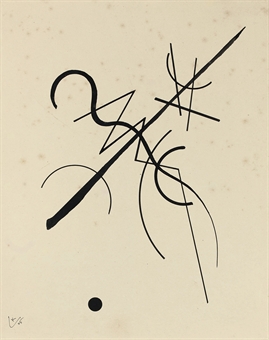
Artists such as Kandinski were thriving in this forward-thinking abstract time, and so many brilliant works of art and design came round to inspire future generations. 

(Source: christies.com)

(Source: moma.org) 

(Source: christies.com) 

Thursday, 13 March 2014

A New Angle - Cubism

Cubism was a new innovative experimental art movement, pioneered by artists such as Picasso and Georges Braque. It explores both the human form and objective forms from different angles and creates a fractured, abstract image build of shard like forms with images of an object from different angles, almost as if it has been shattered and pieced back together. It's highly regarded as one of the most influential, if not the most influential art movement of the last century, as it gave artists a new way to think about their artwork, leading into far more complex movements such as surrealism. It has influenced fashion too; many designers have looked into the different ways we see the body and have taken the typical shapes and abstracted them to give new silhouettes.

(Source: burgessart.wordpress) One of Picasso's cubist works - he had quite a few cubist styles, and this one is far more analytic than experimental. It captures the person so you can tell that they are indeed a person, but disjoints and fractures the image to give a sense of movement.

(Source: artyfactory.com) Picasso's famous 'Weeping Woman' - you can see the major differences in the two images - this one is extreme abstractionism, and in this case the cubism fractures give her an entirely broken look, as if her emotions are projected directly onto her form.

Cubism is one of my favourite art movements because I strongly feel it almost forces you to look at something from a new perspective, allowing you to break through any restrictions you had about it before - you'll notice something new, and from that you can gain new inspirations and new creative techniques.

Hooray for Hollywood

In today's world, Hollywood is one of the main places to look for trends aside fashion week, with actresses becoming style icons and millions of young admirers copying their styles and sparking off worldwide trends. The 20's was the time in which this came about - screen sirens showcased the new feminine style and the elements that made it up, be it hair and makeup, the silhouette or the garments worn.

(Source: xojane.co.uk) Screen Siren Theda Bara with her signature 'Vamped' look - heavily rimmed with kohl, attention is directly on the eyes and makes them really pop - which is good as they are simply stunning.


From the Hollywood (or Hollywoodland as it was called at the time) scene came a new beauty trend which would be worn by the majority of trend-conscious young women at the time - the 'Vamped' look. Two screen stars in particular, Theda Bara and Pola Negri set in motion the trend for eye makeup, and so a vampiric look with coal-dark eyes and just bitten lips became the height of fashion - a dramatic and strong look focusing in on the eyes, it used accessories such as ribbons or fringes to conceal the forehead and bring attention down to the eyes.


(Source: polanegri.pl) A slightly more toned down look compared to Bara's, it is darkly ethereal and the lips are a gorgeous dark shade.

Draping was now extremely popular, but Hollywood also provided a platform for Madeline Vionnet with her bias cut creations. The shape flowed around and emphasised the female form, and as it grew in popularity many started to take inspiration from cubism.
(Source: emblah13.wordpress) Screen Siren Irene Castle wearing Vionnet - The draping shows off her form so well and exposes just the right amount of flesh

The New Man

Like the new carefree woman, men also grew more casual towards things. Their clothes became casual - straw boaters and softly tailored suits became a huge trend, and so did driving fast cars - racing their cars around the country, towns and cities was a huge past time, as well as drinking cocktails and partaking in sports activities (a huge statement to show you were part of the 'it crowd as sportswear was becoming increasingly popular). The new man was a brilliant counterpart to the new type of woman appearing, and together men and women in society led their own, fun and happy lives in this new place of hope.


(Source: pinterest) The relaxation of Men's fashion in the 20's - I think the trousers tucked into the socks is a winning look as it makes the silhouette look so interesting and also injects a boost of pattern and colour into the outfit.


(Source:vintage.es) Young men racing their treasured cars in the mid- 20's.

Monday, 24 February 2014

A New Era; The Roaring Twenties

__


The war was a dramatic turn of events, and so reflecting this was the dramatic change of mood that came with the end of the war - years of sadness, hopelessness and struggle suddenly turned to hope and the want to live life to the full; people were finally beginning to look forward. 


(Source: zazzle.com) 'Afternoon Play' by George Barbier - I really enjoy looking at his work because I think it captures the nature of the entire decade so well - everyone seems so free and content in his images. It's quite a simplistic style of drawing but with a modern feel, as everyone was looking forward to new and exciting things.
#
(Source: weheartit.com) 'The Fireworks' by George Barbier - he often depicted different types of couples in love, such as the sporty types (below) or the socialites (above). It reflected upon the positive feelings of the 20's and the love people were sharing after the devastation of the war.
(Source: pinterest) 'Lovers in the Snow' by George Barbier.

People wanted to feel young again in this new time, and designers and artists were picking up on that, so they found new ways of making art, freer clothes and leisure spaces and in general the world was creating a new way of living with new attitudes and values.
(Source: V&A) One of Victor Steibel's fashion designs - the silhouette has become more slick and streamlined, with futuristic design detailing such as the collar, and the free nature of the 20's is shown in the baring of flesh.

Everything became casual - a world away from the tight-lipped, corseted ways of the previous decades. Clothes and manners lost their formality, and people were finding and revelling in their own freedom; young people lived away from their parents, everyone was relaxing, showing off and having fun in a carefree way.


(Source: hairarchives.com)


(Source: tvtropes.org) Early versions of the flapper girls

Women were beginning to embrace this new sense of independence brought to them by the end of the war - they did what they wanted when they wanted without the rules of society or a man, as they would've in previous years. They would go to parties on their own, smoke in public, wear revealing clothes (hemlines had shot up), and embraced a whole new look - whilst before the hair was many curls piled high on the head, girls were now chopping away their locks and emphasising their natural beauty with makeup like never before! This trend skyrocketed and became the 'Flapper Girl' look  and lifestyle - the dictionary definitive of a flapper is "A young woman, especially one in the 1920s, who showed disdain for conventional dress and behavior." They were free, independent and the new definition of beautiful.