Wednesday, 19 March 2014

From Riches to Rags

The extravagant opulence of the past era had gone - everything was becoming bare and simple, and the world (America in particular) was sinking into a mood of depression - the great depression. Everything changed almost overnight, and now many who were seeking leisure and fun before were now seeking jobs, just to get by. The Wall Street Crash opened up a huge contrast in classes - the poor were now extremely poor, and the rich, extremely rich, with no middle man in between.


(Source:typepad.com)


As with many examples of poor humanity, the rich were still spending on lavish items as they did in the 20's with no second thought to the struggle of others. They could afford to keep servants and have multiple huge houses in different countries, spending money in the most expensive boutiques to keep them in the lap of luxury whilst the poor suffered. Some families of 8 or more would only be able to afford one room with no sanitary items such as the bare minimum of running water.


(Source

(Source:english.illinois.edu)


(Source: migrationheritage.nsw) Children lining up for free soup and bread

The End of the Roaring Twenties

(Source: 21stcenturyschools.com) 

(Source: lajollalight.com)

All in all, the 20's was a huge era culturally; everything tied in together, and everyone was spending so much time and money on leisure and the arts that everyone became slightly dishonest and forgot about being wise with their money - this dishonesty and little care left America in crisis with the Wall Street Crash in 1929 - this age of happiness, prosperity, opulence and luxury had come to an abrupt and devastating end.


(Source: static.guim.co.uk)


(Source: bethkwilson.files)

Unveiling the Body

Bare skin was fast becoming one of the most popular trends - whilst in previous decades the focus was on covering as much as possible whilst still retaining an exaggerated hourglass look to show of feminine curves, the new way of thinking in the 20's had created the polar opposite of trends - loose fitting clothes shielded the curve of the waist, but in balance, there was so much more skin being shown - sleeveless, high hemmed and backless garments allowed for the beauty of the curves of ankles, backs, necks and arms to show through, showing femininity but also I think power in the way that they didn't need tailored garments to show off their curves any more; it was their choice to show what they wanted to.


(Source: wikipedia) 

(Source: chiccheapcloset.tumblr.com)

(Source: metmuseum)

It wasn't just happening in the confines of the Fashion world - Jean Patou (french designer well known for going against the grain and creating a sporty, almost anti-flapper look) created a sleeveless sweater for tennis champion Suzanne Lenglen - it was feminine, with a scoop neck and bare arms and pleats, but still had a powerful look with the strong shape.


(Source: awhitecarousel.com) Suzanne Lenglen playing the championship in 1925

Designers took note of this trend and soon plunging backs on draped dresses were appearing everywhere, particularly in eveningwear.

I banish thee, curves!

Just as the art of straight lines was taking over in the art world, the fashion world was following suit - cocktail dresses replaced the tea dress; softly tailored, mostly drop-waisted dresses usually heavily embellished with beading or fringing. It gave a very rectangular shape which was highly favoured over the nipped- in waists of the past years. Consequently, corsets, already on the decline, vanished almost completely, for now women were embracing boyish silhouettes, perhaps due to the blurring  gender hierarchy?


(Source: deepglamour.net) Cocktail dresses from the 20's - they seem very weighty and the focus seems to be down - I love the hundreds of sequins and beads running down the far dress - it gives couture-esque detailing to a simple shape.
(Source: metmuseum.org) Evening Dress, 1927, Coco Chanel

(Source: pinterest) A sheer evening dress with Art Deco panels of cascading beads - I think it's beautiful how the beads weigh down an otherwise floaty fabric, giving it a whole new look


Everything was hung /draped off the body - loose fit, tassels hanging down to the floor, shawls and scarves dramatically thrown over shoulders to give a relaxed but also extremely elegant look. This was all highly influenced by Chanel, whose jersey dresses hung with a straight rectangular shapes from the hips to give a very streamlined, chic and simple look. This style is deeply associated with the Roaring Twenties and the Jazz Age, given the new feel of the garments and the smoothness which I feel ties in with the smooth music of the time.
(Source: Pinterest) Daywear in the 20's - The way the drop waists are cinched in is really genius because it hints at curves whilst still allowing women to retain the androgynous silhouette


(Source: ivy-thisiswhatwedo.com) Illustration of all the outfits a typical girl in the 20's may wear - notice how the only seriously curved silhouette is the grieving.


After the war, though couture was still at the height of its time, mass market production had become popular and the clothes were cheap; still giving the same look as something you might find in on the rails of a Parisian atelier, but with a lower quality. These were mass produced and so everyone had the opportunity to wear the trends, blurring the social hierarchy of fashion.


(Source: blogspot) Magazine advertisement for clothes - the Parisian elegance and influence of those like Chanel was showing through, but yet this is accessible for everyone.


(Source: fashion-era.com) Article for McCall's - it describes how their designers were visiting Paris to inspire their mass-market designs, and since they were a popular retailer, everyone would be wearing almost the same look.

Sunday, 16 March 2014

Oxford Bags - Room to Gigolo Your Legs!

As fashion was getting more casual, especially with menswear, fitted garments were on the decline - whilst everything was nipped in before, now it was flaring out and softer shapes were used.
(Source: fashion beans.com) Advertisement for a pattern for Oxford Bags, and Oxford graduates wearing them. I think it works really well with the pinstriped suit as it adds a point of interest.

Oxford undergraduates had started wearing grey flannel trousers which were loose fitting and baggy - to the very extreme it could be taken to; these huge billowing layers of fabric flowing around men's legs as they walked. I think these are brilliant and so different compared to the skinny trends we have now - it looks so casual and paired with a suit jacket creates a really smart-casual balanced look.

(Source: putthison.com) 

In contrast to the relaxed garments, Men nicknamed 'Gigolos' (dark skinned South American men) who wore razor-sharp tailoring and perfectly pressed garments were appearing in clubs. They rivaled the classic gentleman's look, and many women were drawn to them, so they became sorts of male escorts. I think their look is classic and despite the undertones of loose morals and high sexualisation, they seemed like smooth, neat men. 

(Source: dailymail) Modern day portrayal of a Gigolo
(Source: wanderlustnpixiedust.com) Illustration of a Gigolo

Saturday, 15 March 2014

The Cotton Club


The Cotton Club was a New York nightclub which was open from 1923 to the 1940's. It first opened in Harlem, being a 'whites only' club despite famous black musicians such as Nat King Cole and Louis Armstrong. It continued to sell beer even during prohibition (a national ban on the sale, importation, production and transportation of alcohol in America in the 20's and early 30's). Since The Cotton Club was run (behind the scenes) by gangsters, they got away with it many times and continued to do so.

(Source: longwharf.com) The Cotton Club exterior 


(Source: wikimedia) Gangster Owney Madden, who ran the famous club and famed for his organized crime, especially during Prohibition.

https://www.youtube.com/watch?v=Fy_JRGjc1To Nat King Cole performing 'Unforgettable'

(Source: wikimedia) Louis Armstrong - you can tell just by one picture that his music was upbeat and fun

Clubs were huge in the 20's - a craze for dancing had erupted, and it spread like wildfire - Ragtime was reaching the height of popularity, as was the Tango (due to its starring role in many Hollywood movies) and new styles of dance, such as Lindy Hop and Jazz were evolving due to the popularity of jazz and blues music, and the amount of Gatsby-esque parties they were danced at.
(Source: allpurposeguru.com) A still from the outrageous Ragtime dance.

However one dance in particular epitomised the 20's - The Charleston. It involves much bobbing to the music, with outward kicks and arm movements. It was performed in many clubs including speakeasies - flapper girls were seen dancing to this the most, but its popularity was so strong it became a full blown fad! I myself used to dance The Charleston and it was such a fun dance to do - tiring, but really social and carefree; much like the 20's themselves.

https://www.youtube.com/watch?v=ZJC21zzkwoE The Charleston

Walk The Line

In contrast to the previous eras with trends of Art Nouveau and curved silhouetted, with its arcs and flicks, the 20's was very much about banishing curves and replacing them with strong, clean lines. The focus on detailing had almost entirely disappeared and now art and architecture was filled with lines and minimal detailing. Many buildings were rectangular with simple triangular details. Everything was becoming abstract and almost futuristic, given the high spirits and forward movements of almost everything.


(Source: deco-shades.com) The Rockefeller Centre, The Chrysler Building and the Empire State building. All are based on a stacked, almost Russian doll look of rectangular columns, and I especially like the contrast between the structured curves and sharp lines on the Chrysler Building.

In 1925, the Exhibition of Decorative Arts was held in Paris. It was to showcase the achievements of new modern decorative arts, and many artists and designers showing were urged to not use anything that had been done; with most focusing on modernisation of tradition or complete modernisation, and so the world was inspired immediately by this sense of progression, completely changing the worldwide aesthetic. Many French designers and artists showed their work, making sure Paris was still the trendsetting capital of the world.


(Source: wolfsonian.org) Poster for the exhibition.

One of the famous displays was the  Hôtel d'un Collectionneur created by Pierre Patout. It was a building housing a series of chic rooms decorated in collaboration with acclaimed furniture designer Jacques-Emile Ruhlmann, and included a huge oval room. 


(Source: V&A) The Hôtel d'un Collectionneur 


(Source: gallerieseru.com) Inside the Hotel d'un Collectionneur - the 'Grand Salon' or 'The Oval Room'

Another notable part of the exhibition was the new generation of mannequins on display in the windows of the exhibition boutiques - they were more streamlined and exaggerated, with graceful long necks and angular, perfectly rouged and lined faces. They reflected the new style of illustration and the simple nature of the architecture and decoration around. Pierre and Siegel Imans created mannequins inspired by cubism and avant-garde art. 


(Source: marshabentleyhale.com) Mannequin by Pierre Imans

(Source: V&A) Mannequin bust and head for Milinery and Jewellery in the exhibition - creator unknown. 

(Source: glymskratti.blogspot) You can see the similarities in the sculpted mannequin to the illustration style of the time, as seen on a 20's cover of VOGUE magazine.

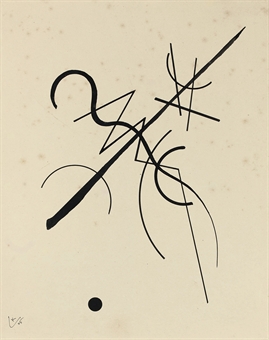
Artists such as Kandinski were thriving in this forward-thinking abstract time, and so many brilliant works of art and design came round to inspire future generations. 

(Source: christies.com)

(Source: moma.org) 

(Source: christies.com)